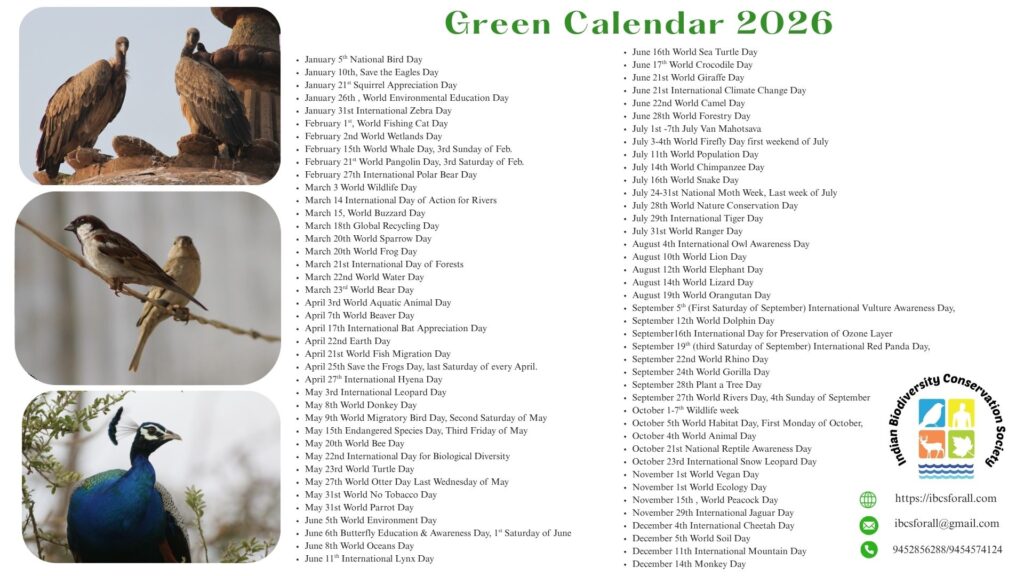
The 2026 celebration will center on the theme of “Colors of Conservation: Celebrating Nature with Peacocks”.
The brilliant colors of peacocks symbolize the diverse beauty of nature. This theme emphasizes the importance of conserving all species, with peacocks as the symbol of nature’s vibrancy.
Preserving India's Biodiversity for Generations to Come
Welcome to IBCS, where our mission is to protect and promote the incredible biodiversity of India. Join us in the conservation effort to ensure a sustainable future.
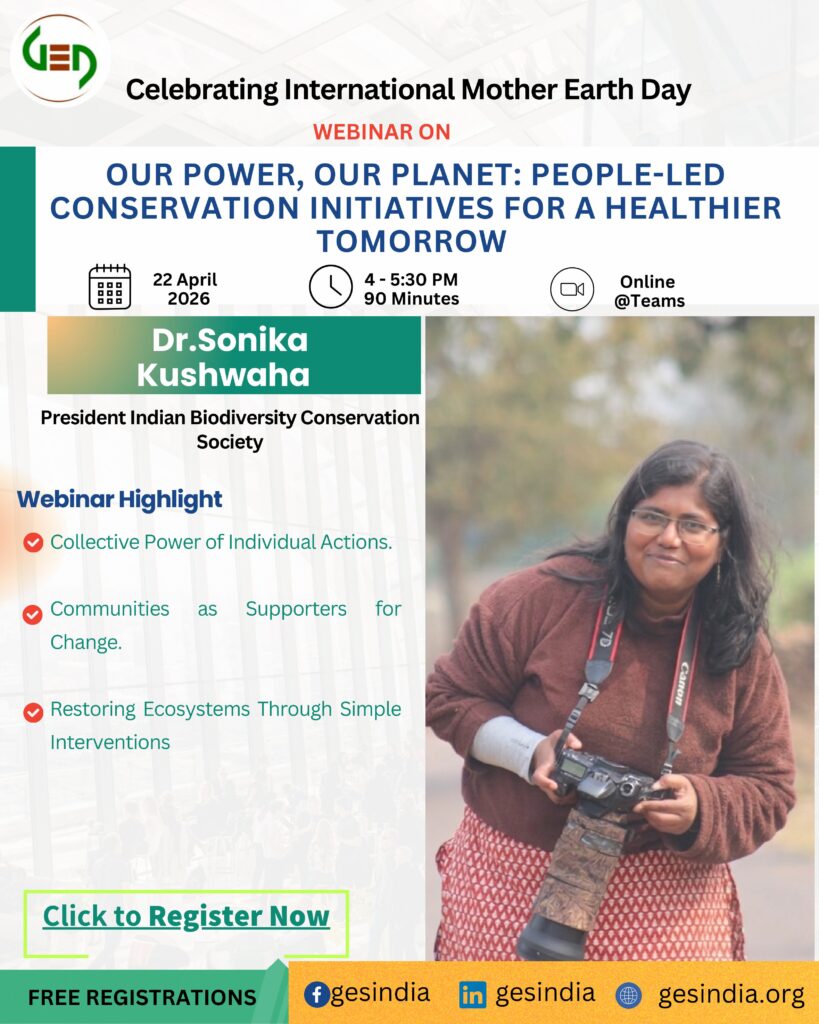
On the occasion of International Mother Earth Day, GES invites you to an insightful webinar: “OUR POWER, OUR PLANET: People-Led Conservation Initiatives for a Healthier Tomorrow.” Join Dr. Sonika Kushwaha, President, Indian Biodiversity Conservation Society, as she shares how simple, community-driven actions can restore ecosystems and create lasting environmental impact. ◾ Date: 22 April 2026 ◾ Time: 4:00 PM – 5:30 PM ◾ Mode: Online | Microsoft Teams
◾ Webinar Highlights: • Real-world insights into people-led conservation • Practical approaches to ecosystem restoration • Inspiration to turn individual actions into collective impact
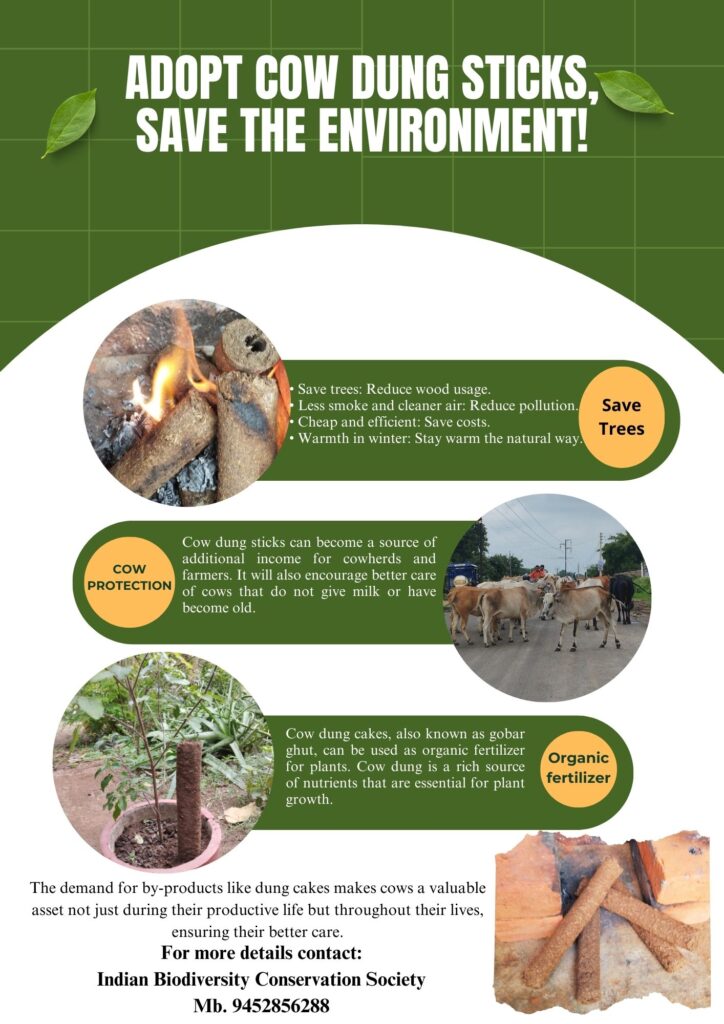
Light Up Naturally: Eco-Friendly Bonfires with Cow Dung Sticks!
Cow dung sticks are made from cow dung. Using cow dung sticks (also called dung logs or bio-sticks) can play a role in improving the conditions of cows by promoting a circular economy in cattle-rearing communities.
Who we are
Indian biodiversity Conservation society is a registered non-profit organization that started on 23rd July 2015 in a small city of Uttar Pradesh, Jhansi with the motive to study wildlife related problems and recommend management plans for in-situ conservation of wildlife. IBCS aims to disseminate knowledge of flora and fauna by means of lectures, field trips, literature, expeditions and imparts widespread environmental education and training through a vast network for teachers, students and communities.
What We Do?
We are interested in exploring remote ecosystems that are unprotected and still unexplored. Our main approach to wildlife management and conservation is to include the local people so as to gain their cooperation and support, which will eventually result in integrated conservation and development.Throughout the journey so far, IBCS is actively involved in research projects and awareness drives. IBCS has also rescued and released various bird species including vultures, owls and peacocks.
Our impact on nature and society
Generation of baseline data regarding various species.
Conservation of biodiversity outside the protected areas.
Mass awareness through press media.
Inspiring the students to adore and value nature.
Sensitization of youth to volunteer in nature conservation.